Choosing the right Mig Stainless Steel Flux Cored Wire supplier can shape weld quality, production speed, and long-term costs. This guide introduces ten suppliers serving fabrication shops, maintenance teams, and industrial welding operations. Each company deserves attention for different reasons, including wire consistency, technical support, delivery reliability, and documented product performance.
A dependable supplier should provide clear specifications for stainless grades, shielding gas requirements, wire diameters, and recommended welding positions. Experienced buyers also check batch traceability, packaging quality, and storage guidance. A damaged spool or poorly sealed carton can create feeding problems before welding even begins. Small details matter.
The evaluation considers practical evidence rather than impressive claims alone. Product data sheets, certifications, customer service response, and application knowledge help reveal supplier reliability. Factory capability matters too. A supplier may offer attractive pricing but lack stable production controls. That assumption can fail.
No supplier fits every workshop. A shipyard may prioritize large-volume delivery, while a repair contractor may need smaller orders and fast advice. The right choice depends on material thickness, welding environment, equipment settings, and project demands. This comparison aims to support a more informed decision, not force a universal ranking.
Some supplier information may change over time. Prices, certifications, lead times, and regional availability require direct verification. That is worth remembering. By reviewing these ten companies carefully, buyers can reduce avoidable trial costs and select Mig Stainless Steel Flux Cored Wire with greater confidence.
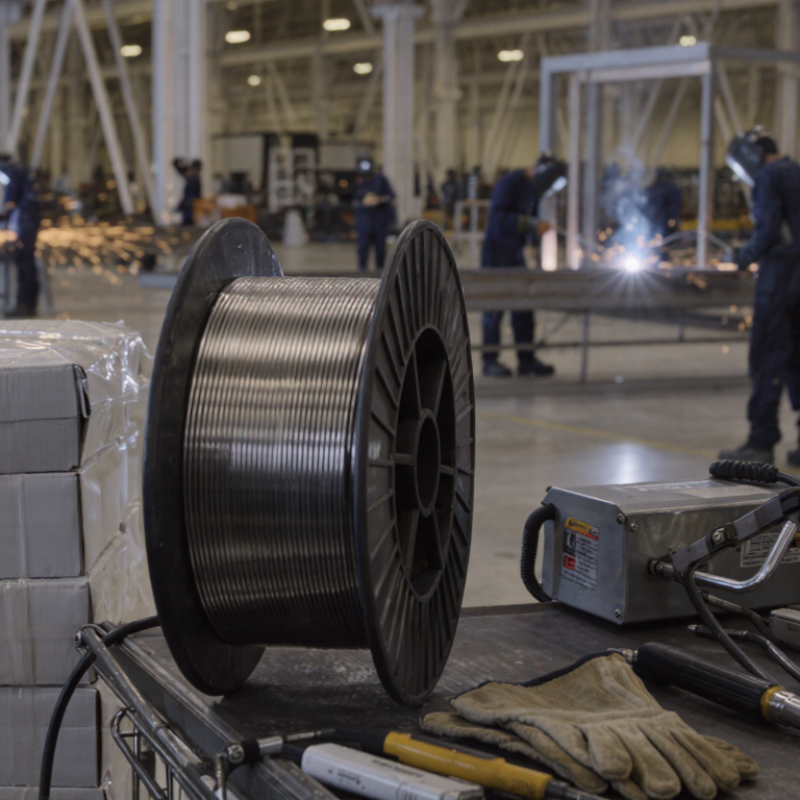
MIG stainless steel flux cored wire is a tubular welding wire filled with flux. It melts through a continuously fed arc process. Many versions use external shielding gas, while self-shielded types rely on their internal flux. The flux forms protective slag and helps stabilize the arc. AWS A5.22 classifications identify key features, including stainless composition, usability, and shielding requirements.
This wire suits food-processing frames, chemical tanks, exhaust systems, and outdoor repairs. It can produce strong deposits on thicker stainless sections with less manual feeding skill. The operator still needs clean edges, correct polarity, and controlled travel speed. A dirty joint may trap slag. That mistake is common.
A 2024 MarketsandMarkets report projects the global welding equipment market to grow from about USD 15 billion in 2023 to more than USD 20 billion by 2028.
That expansion supports continued demand for efficient consumables, including stainless flux cored wire. Supplier selection should go beyond price. Request classification certificates, batch traceability, recommended gas settings, and storage guidance. Wire diameter also matters: smaller wire supports thinner sheet, while larger wire increases deposition on heavy fabrications. Practical trials remain essential. Published data cannot predict every weld position, joint gap, or workshop condition.
Selecting among the 10 best MIG stainless steel flux cored wire suppliers requires more than comparing prices. The International Stainless Steel Forum reported 58.4 million metric tons of stainless steel production in 2023. That scale increases pressure on suppliers to deliver stable chemistry, reliable capacity, and consistent batch quality.
Start with documented compliance. Ask for certificates covering AWS A5.22 or ISO 17633 requirements, including deposited weld metal chemistry and mechanical results. Traceability should connect each spool to a heat, batch, and test record.
Small detail. Very important.
Request recent data on deposition efficiency, fume performance, arc stability, and shielding gas recommendations. Suppliers should explain test methods, not only publish attractive numbers.
Packaging also deserves attention.
Moisture-resistant wrapping, clear lot labels, and controlled storage reduce avoidable weld defects. A 2024 welding consumables market analysis by MarketsandMarkets identifies productivity and quality consistency as major purchasing drivers.
Therefore, evaluate actual trial welds, not brochures. Check bead appearance on thin and thick stainless sections, including starts, stops, and positional work. Technical support matters when operators face porosity or excessive spatter.
Delivery evidence matters too, such as average lead time and emergency stock policies. I would not ignore price, but price alone can hide costly rework. One weakness remains: supplier claims often rely on limited sample tests. Independent verification is safer.
When selecting among the 10 best MIG stainless steel flux cored wire suppliers, certification should be checked before price. AWS A5.22 and ISO 17633 define requirements for stainless steel flux cored electrodes, including composition, weld performance, and classification. A reliable manufacturer should provide current certificates, not scanned documents with unclear dates.
Quality systems matter. The ISO Survey of Certifications 2022 recorded 1,265,216 ISO 9001 certificates across 189 countries and economies. This shows how widely quality management is used, but certification alone does not guarantee consistent welding wire. Ask for heat numbers, batch records, chemical analysis, tensile results, and diffusible hydrogen data. Traceability should follow each spool from raw material to final inspection.
Look closely.
Environmental and safety controls add further credibility. ISO 14001 supports environmental management, while ISO 45001 addresses occupational health and safety. Independent laboratory testing can verify ferrite content, corrosion resistance, and arc stability under practical welding conditions. Supplier audits should also examine storage areas, moisture control, calibration records, and complaint handling. A polished certificate can hide weak production discipline. That risk deserves attention. On-site trials remain valuable, because wire that passes laboratory tests may still produce excessive spatter, unstable feeding, or poor bead appearance in real fabrication environments.
Reference framework for evaluating stainless steel flux-cored welding wire manufacturers
The chart maps widely used product and management-system references for supplier qualification. AWS A5.22 and ISO 17633 address flux-cored electrodes for stainless and heat-resisting steels, while ISO 14343 covers wire electrodes, strip electrodes, wires and rods for fusion welding of stainless and heat-resisting steels. ISO 9001, ISO 14001 and ISO 45001 are management-system standards commonly used to assess quality, environmental and occupational health-and-safety controls. Product classification and certification scope should always be verified with the supplier.
Choosing among ten stainless steel flux cored wire suppliers requires more than comparing price lists. I compare wire classification, stainless grade compatibility, shielding requirements, and batch documentation. Suppliers 1–3 usually provide broader size ranges, including 0.9 mm and 1.2 mm wire. Suppliers 4–6 often compete through stable delivery and flexible minimum orders. Suppliers 7–8 may offer stronger technical guidance for robotic welding. Suppliers 9–10 can be attractive for custom packaging, but their testing records need closer review. These differences matter on a workshop floor.
I also check deposition rate, arc stability, slag removal, and weld appearance on actual coupons. A good supplier should explain storage conditions, lot traceability, and recommended amperage without vague promises. Ask for mill certificates and sample spools. Small details count. In my experience, a wire that runs smoothly for twenty minutes may still reveal porosity after cooling. That is where my comparison remains imperfect; one trial cannot represent every joint design, operator, or welding position. A second test is wiser.
Tips: Match the wire to the base metal and service environment. Confirm whether external shielding gas is required. Store unopened spools in a dry cabinet, and record lot numbers during testing. Compare support response time, not only the quoted price. If a supplier avoids technical questions, reconsider the purchase. Also inspect the weld toe, bead profile, and slag release under consistent settings.
Choosing among the 10 best MIG stainless steel flux cored wire suppliers requires more than comparing spool prices. Ask whether the wire matches your stainless grade, joint design, and welding position. Check diameter options, recommended shielding gas, polarity, and operating current. A supplier should provide technical data sheets, safety documents, batch numbers, and clear storage guidance. Lot traceability matters when weld appearance changes between deliveries.
Pricing should include more than the invoice. Compare wire weight, deposition efficiency, shipping charges, and expected rework. A low-cost spool may create extra slag, spatter, or slower travel speeds. Request samples before placing a large order. Test them on the actual base metal, using your shop’s machine and gas flow. Record arc stability, bead profile, cleanup time, and defects. Small trials reveal problems that catalogs often hide.
Technical support can determine whether a purchase succeeds. Reliable suppliers should answer questions about voltage, wire feed speed, stick-out, and gas selection. They should help review procedure qualifications when production requirements become demanding. Fast replies are useful, but accurate replies matter more. I still get this wrong sometimes: a familiar setting may fail after changing wire diameter or shielding gas. Ask for written recommendations, not casual guesses. Keep production records, because even consistent wire can behave differently after poor storage or a long transport delay.
| Supplier Profile | Typical Product Focus | Common AWS Classification Examples | Indicative Budget Range (USD/kg) | Purchasing Considerations | Technical Support to Request | Best Fit |
|---|---|---|---|---|---|---|
| 1. Large-scale welding consumables manufacturer | Broad stainless FCAW range, regular production lots, and export packaging options. | E308LT1-1/-4; E316LT1-1/-4; E309LT1-1/-4 | $10–$20; alloy, order size, and delivery terms affect the quote. | Request a current certificate of conformity, batch traceability, production lead time, and quoted Incoterm. | Ask for recommended shielding gas, polarity, parameter ranges, and procedure documentation for the exact wire classification. | Buyers seeking repeat orders and a broad product range. |
| 2. Specialist stainless filler-metal producer | Stainless-focused wire grades, with attention to alloy chemistry and weld-metal performance. | E308LT1-1/-4; E316LT1-1/-4; E347T1-1/-4 | $12–$23; specialty grades may be quoted at a premium. | Confirm the requested classification, diameter, spool size, and whether the price includes testing documents. | Request chemistry data, weld-metal test results, and guidance on corrosion-service suitability. | Applications where grade matching and documentation are priorities. |
| 3. Regional welding-supply distributor | Stocked common grades, smaller order quantities, and local delivery. | Commonly stocked examples: E308LT1-1/-4 and E316LT1-1/-4 | $13–$25; smaller quantities and local availability can affect unit cost. | Check stock status, spool compatibility, shelf condition, returns policy, and delivery charges. | Ask whether product-specific setup advice or access to the manufacturer’s technical team is available. | Workshops that need quick replenishment or modest quantities. |
| 4. Export-oriented welding-wire supplier | Container or consolidated shipments, export packing, and documentation for overseas orders. | E308LT1-1/-4; E309LT1-1/-4; E316LT1-1/-4 | $9–$19 FOB; freight, duties, and order volume are additional cost factors. | Compare total landed cost, packaging requirements, payment terms, shipment schedule, and export documents. | Request product data sheets, classification evidence, and written storage and handling recommendations. | Importers and buyers placing planned, larger-volume orders. |
| 5. Private-label and OEM supplier | Custom packaging or labeling, typically subject to order-volume and approval requirements. | Available classifications depend on the supplier’s qualified product range; verify each designation. | $10–$22; setup, packaging, and minimum-order requirements may apply. | Clarify ownership of artwork, minimum order quantity, change-control process, and lot-to-lot consistency. | Request product qualification records and a process for notifying buyers of specification changes. | Distributors developing a house-label consumables range. |
| 6. Application-focused welding supplier | Product selection and guidance for fabrication, repair, and joining dissimilar stainless steels. | E308LT1-1/-4 for compatible 304-type applications; E309LT1-1/-4 is commonly considered for dissimilar joining. | $12–$24; application-specific grades and services may change the quote. | Provide base-metal grades, thicknesses, joint design, and service conditions before comparing offers. | Request a preliminary consumable recommendation and confirmation that a qualified welding procedure is still required. | Fabricators who need help narrowing down a suitable wire classification. |
| 7. Certified-documentation supplier | Orders supported by traceable batch records and specified quality documentation. | Classification and supporting documents should be confirmed on the quotation and order. | $12–$25; documentation scope and order size can influence price. | Specify document requirements before purchase, including heat or lot traceability and inspection records where applicable. | Ask for test-report interpretation and confirmation of the exact standard edition and classification supplied. | Projects with formal quality plans or customer documentation requirements. |
| 8. High-volume contract supplier | Scheduled supply, negotiated volume pricing, and planned replenishment for recurring demand. | Often centered on repeat-use grades such as E308LT1 and E316LT1; verify suffix and usability requirements. | $9–$18; volume pricing depends on forecast, shipment size, and contract terms. | Agree on forecast tolerance, delivery windows, safety stock, price-review terms, and remedies for shortages. | Request consistency controls, change notification, and technical escalation contacts for production issues. | Manufacturers with predictable, ongoing wire consumption. |
| 9. Small-quantity or sample-order supplier | Trial quantities for process evaluation, equipment setup, or limited repair work. | Availability varies; common trial candidates include E308LT1 and E316LT1 classifications. | $15–$30; small orders, handling, and shipping can raise the effective cost per kilogram. | Confirm sample quantity, spool format, availability of the full production lot, and whether samples are refundable or credited. | Request a data sheet and setup guidance, then validate performance through an appropriate procedure and application test. | Buyers evaluating a wire before committing to a larger order. |
| 10. Local service-and-consumables supplier | Regional stock, delivery coordination, and practical support for welding equipment and consumables. | Stock may include E308LT1-1/-4, E316LT1-1/-4, or E309LT1-1/-4; confirm exact suffix. | $13–$26; local service, stock, and delivery arrangements affect pricing. | Compare availability, delivery reliability, storage practices, and the supplier’s process for handling quality complaints. | Ask for troubleshooting support covering feedability, gas setup, and parameter checks for the specific product. | Local operations that value responsive service and accessible stock. |
| Pricing and selection note: The price bands above are illustrative budgeting ranges, not verified supplier quotations or guaranteed market prices. They are not directly comparable unless alloy classification, wire diameter, spool size, order quantity, delivery terms, and documentation requirements are the same. Confirm the exact AWS classification and suffix: gas-shielded stainless flux-cored wires require the shielding gas specified by the product manufacturer, and suitability should be established for the base metal, service conditions, and qualified welding procedure. | ||||||
It is tubular welding wire filled with flux. The wire feeds continuously through an electric arc. The flux forms protective slag and helps stabilize the arc.
No. Some types use external shielding gas. Self-shielded types rely on internal flux during welding. Check the wire classification before choosing gas settings.
It suits food-processing frames, chemical tanks, exhaust systems, and outdoor repairs. It also works on thicker stainless sections. The weld area still needs careful cleaning.
Clean the joint edges before welding. Use the correct polarity and steady travel speed. A dirty joint may trap slag. That mistake is common.
Smaller diameters generally suit thinner stainless sheet. Larger diameters increase deposition on heavy fabrications. Joint design and welding position also matter. Published charts cannot predict every workshop condition.
Request current classification certificates and batch traceability records. Each spool should connect to a heat, batch, and test record. Ask for chemical analysis and mechanical results. Unclear certificate dates deserve caution.
Look for moisture-resistant wrapping and clear lot labels. Store the wire under controlled conditions. Moisture can contribute to porosity and unstable welding. Small details matter.
Perform trial welds on thin and thick stainless sections. Check starts, stops, positional work, bead appearance, and spatter. Measure arc stability and feeding performance. Laboratory results are useful, but not enough.
Not necessarily. Low prices may hide rework, poor delivery, or inconsistent batches. Compare technical support, lead times, emergency stock, and test evidence. I would still compare total cost carefully.
No certification guarantees perfect workshop performance. Quality systems support consistency, but production discipline can vary. Independent testing and supplier audits add confidence. Practical verification remains necessary.
This guide explores the essential role of Mig Stainless Steel Flux Cored Wire in industrial fabrication, maintenance, construction, and repair applications. It explains how this consumable supports efficient welding of stainless steel while offering benefits such as strong deposition rates, reliable arc performance, and reduced cleaning requirements in suitable conditions. The article also outlines key factors for selecting dependable suppliers, including wire composition, weldability, consistency, product range, packaging, delivery capability, and application-specific technical guidance.
A comparison of ten leading supplier categories is presented through practical criteria rather than brand promotion. These include compliance with recognized quality standards, manufacturing controls, certifications, batch traceability, pricing transparency, minimum order policies, and customer support. Readers will also gain guidance on evaluating total purchasing costs, compatibility with welding equipment, storage requirements, sample testing, and after-sales service. By considering both product quality and supplier reliability, buyers can make informed decisions that improve welding efficiency, joint performance, workplace productivity, and long-term project value.

Runxing machinery